
Disney World vs. Universal Orlando: Student Travel Guide
Planning a student trip to Orlando often means choosing between Walt Disney World and Universal Orlando. Both destinations offer world-class educational programs and attractions, but they approach education, storytelling, and park design in different ways.
For most educators, choosing between Disney World and Universal Orlando is less about identifying the “better destination” and more about finding the right fit for their specific group. That decision comes down to how each destination aligns with program goals, what types of experiences students are interested in, and the length of the trip being planned.
This article provides a practical comparison of Disney World and Universal Orlando to help schools determine which option best aligns with their group’s goals and priorities.
Trip Duration: How Many Days?
The length of an itinerary is often the first factor in determining which destination best suits a school group. As a general guideline, groups with longer itineraries may appreciate the variety and scale of Disney World’s four parks, while groups with tighter schedules may prefer the efficiency and compact layout of Universal Orlando.
Disney World: The Four-to-Six Day Experience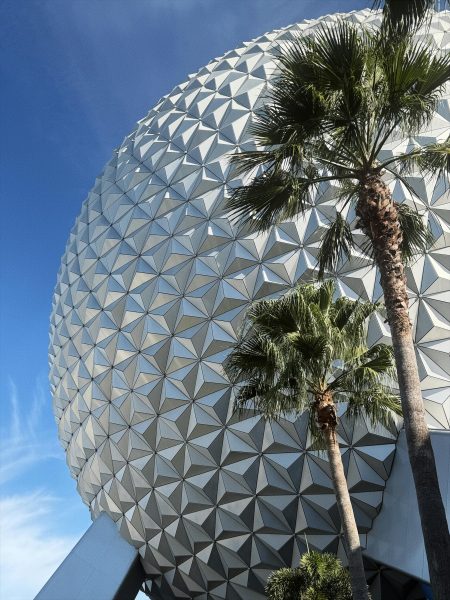
Disney World consists of four distinct theme parks: Magic Kingdom, EPCOT, Hollywood Studios, and Animal Kingdom. Each park is large and varied enough to support a full day of exploration, and many groups find that even a full day only scratches the surface.
Because of this structure, Disney World is often a strong fit for four- to six-day trips, where groups can spend one day in each park and still maintain a manageable pace. Longer trips also allow for flexibility in scheduling park days, workshops and performances, and non-park activities without feeling rushed.
Universal Orlando: The Three-to-Four Day Experience
Universal Orlando’s theme park lineup includes Universal Studios Florida, Islands of Adventure, and Epic Universe, the newest addition to the resort. The parks are more closely connected than Disney’s, and historically, many student groups have been able to experience Universal comfortably within a three-day trip.
With the opening of Epic Universe, however, some groups may choose to extend their stay to four days, particularly if they want more time to explore the new park. Because Epic Universe is larger than Universal’s other parks, groups may benefit from additional time to experience the park without a rushed schedule.
Resort Layout and Logistics
Beyond the calendar, the physical layout of each destination impacts the flow of the trip and how chaperones manage the group. The difference largely comes down to resort size, layout, and how students move between parks.
Disney World: A Large-Scale, Self-Contained Ecosystem
Disney World spans a large, self-contained property, with each theme park operating as its own distinct destination. While the distance between parks is significant, movement is supported by an integrated transportation system that includes Disney-operated motorcoaches, monorails, and Skyliner routes.
For student groups, this structure creates a predictable and controlled environment. Transportation between parks is handled internally, reducing the need to navigate external roadways or public transit. The physical separation between parks also encourages clearly defined daily plans, with groups typically committing to a single park per day rather than moving between locations.
This layout can work well for schools that prefer a more structured daily rhythm and are planning longer itineraries where travel time between parks can be built into the schedule without feeling restrictive.
Universal Orlando: Centralized Core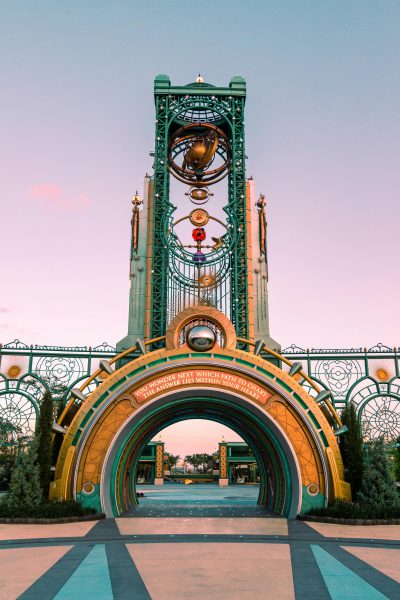
Universal Orlando is anchored by a compact, central hub, which can simplify certain aspects of student supervision. Two of the theme parks—Universal Studios Florida and Islands of Adventure—are situated side by side, connected by the CityWalk dining and entertainment district. This allows educators to establish a central “home base” and meeting point that students can easily navigate on foot.
The addition of Epic Universe expands the resort’s geographic footprint into a distinct separate campus. Because this park is accessed via a short shuttle ride from the original hub, educators must plan for a more structured transportation strategy on the days it is included in the itinerary. This growth has shifted the resort from a single-hub experience to a multi-stop destination, requiring more intentional movement planning than in the past.
Educational Opportunities
One of the most important differences between Disney World and Universal Orlando is how each destination approaches education. While both offer meaningful learning experiences for student groups, Disney generally focuses on the “why” and “how” of storytelling and leadership, whereas Universal leans into the “hands-on” mechanics of modern media production.
Disney Imagination Campus
Disney’s student programming is organized through Disney Imagination Campus, which groups educational experiences into clearly defined categories. This structure makes it easier for educators to identify programs that align with specific disciplines or learning objectives.
Disney’s educational offerings are divided into four primary areas:
- Performing Arts: Workshops and performance opportunities for theatre, choir, band, and dance groups, including programs that focus on rehearsal process, technique, and live performance.
- Arts & Humanities: Experiences centered on storytelling, creativity, and cultural exploration, often using Disney’s parks and narratives as a foundation for broader discussions around communication and expression.
- Science & Technology: Programs that explore STEM concepts (often referred to as “Imagineering”) such as innovation, environmental science, and the physics of attraction design through real-world applications across the parks and resorts.
- Leadership & Innovation: Workshops designed to build collaboration and creative thinking, treating Disney’s world-renowned operational and guest-service models as professional case studies.
This structure can be especially helpful for schools that need to align travel with formal curricular priorities or clearly communicate educational value as part of an administrative approval process.
Universal’s STARS Performances and Educational Workshops
Universal Orlando organizes its student programming around the type of experience students will have, rather than around academic disciplines, offering behind-the-scenes access to a working production studio.
STARS Performances provide band, choir, and dance groups with the opportunity to perform in a professional theme park environment, typically at the Lagoon Stage in Universal CityWalk. For eligible ensembles, performance opportunities may also include marching performances through the streets of Universal Studios Florida. These performances are designed to showcase student preparation and teamwork, and they often serve as the centerpiece educational experience for performing arts groups visiting Universal.
In addition to performances, Universal offers a range of educational workshops that explore the creative and technical elements behind film, television, and live entertainment. These programs typically focus on how large-scale entertainment experiences are created from a technical perspective. Workshops touch on areas such as special effects and production techniques used in modern cinema; sound, lighting, and technical design for live entertainment; and story development and collaboration through the lens of iconic franchises.
Universal’s approach may appeal to schools looking for hands-on and experiential learning experiences, giving students insight into real-world creative careers and the collaborative processes that support them.
Performing Arts Opportunities for Student Groups
Both Disney World and Universal Orlando offer meaningful opportunities for student performing arts groups, including a combination of educational workshops and performance experiences. Below is a breakdown of what theatre, dance, choir, and band groups can expect at each park.
Musical Theatre and Drama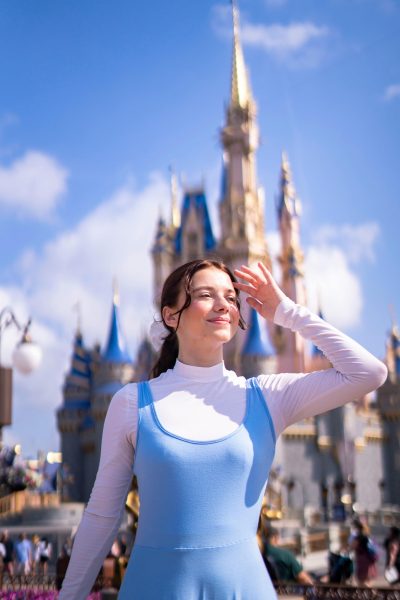
Broadway Magic is Disney World’s dedicated theatre-focused workshop offered through Disney Imagination Campus. Inspired by Broadway rehearsal and performance practices, the workshop pairs students with Disney’s teaching artists to explore storytelling, vocals, character development, choreography, and ensemble performance in a dedicated rehearsal hall resembling a professional studio. Because this workshop focuses on high-level refinement, Disney provides scripts and musical materials in advance, allowing groups to rehearse foundational elements before their arrival Broadway Magic remains one of the most clearly defined theatre-specific educational offerings in Orlando and is often a common draw for drama and musical theatre groups who visit Disney World.
Universal Orlando does not offer a theatre-exclusive workshop comparable to Broadway Magic. Instead, drama and theatre groups typically participate in educational workshops with a theatrical or storytelling angle, depending on program goals. These may include Special Effects workshops, which explore illusion and visual storytelling in film and television, or production-focused workshops that examine how creative teams collaborate to bring stories to life. While less formalized than Disney’s theatre programming, Universal’s approach can still be effective for groups interested in how performance skills translate to film, television, and live entertainment environments.
Dance
Dance Disney is Disney Imagination Campus’s dedicated dance workshop, led by Disney’s teaching artists and centered on choreography and performance techniques used in Disney Parks shows. The workshop emphasizes rehearsal process, ensemble work, and technical refinement, giving students experience learning and performing choreography in a professional rehearsal-style environment. Dance Disney is often paired with performance opportunities and reflects an instructional, technique-forward approach to dance education.
Dance is UNIVERSAL! is Universal Orlando’s dance workshop, led by Universal performers and choreographers. It focuses on performance readiness through an industry lens, incorporating original choreography, audition-style preparation, and performance feedback. The workshop is frequently paired with STARS performance opportunities, reinforcing a performance- and presentation-driven approach tied to themed entertainment.
Choir
At Disney World, choir workshops place vocal music within the context of storytelling and narrative. Soundtrack Sessions: Vocal allows students to work with Disney’s teaching artists in a studio-style setting, focusing on ensemble singing and expressive performance through Disney repertoire. Music and Storytelling further explores how vocal music supports emotion, atmosphere, and narrative across Disney parks and media. These workshops are often followed by Festival Disney – Choral, combining conceptual learning with adjudicated performance.
At Universal Orlando, choir experiences emphasize live presentation and ensemble performance, sometimes in a soundstage environment where students learn to sync their performance to professional film and animation sequences. Through the STARS Performance Program, choirs focus on preparation and delivery in high-visibility performance settings such as STARS Stage Performances and STARS Marching Performances. The emphasis is less on musical analysis and more on execution, teamwork, and performance in a professional entertainment environment.
Band and Orchestra
At Disney World, band and orchestra workshops frame instrumental music as a storytelling and compositional element. In Soundtrack Sessions: Instrumental, students work with Disney’s teaching artists to rehearse and perform music from Disney films and parks, focusing on ensemble blend and how music supports narrative. Music and Storytelling extends this lens by examining orchestration and thematic development across Disney entertainment. Performance opportunities such as Festival Disney – Instrumental and marching band performances allow groups to apply these concepts in live settings. Marching opportunities at Disney World typically take the form of an Honor March, providing a formal and ceremonial experience for ensembles on some of the world’s most famous thoroughfares.
At Universal Orlando, band and orchestra experiences place instrumental music within a production-focused context. Through the STARS Performance Program, workshops such as Sound Design: Music and the Art of Foley explore how music interacts with sound effects, visuals, and timing in film and live entertainment. These experiences are typically paired with STARS Stage or STARS Marching Performances, emphasizing coordination, precision, and execution as part of a larger production ecosystem.
Immersive Worlds and Characters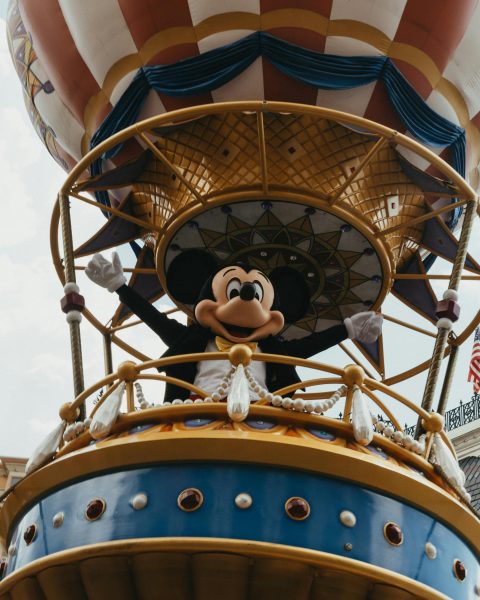
Beyond formal workshops and performances, much of a student trip to Orlando is shaped by the immersive worlds students experience throughout the parks. The franchises, characters, and environments that anchor each destination play a meaningful role in student engagement and overall enthusiasm for the trip. Both Disney World and Universal Orlando are leaders in immersive storytelling, but they approach it differently.
Disney World: Story-Driven and Character-Based Attractions
Disney World’s parks are built around character-driven and fantasy-forward storytelling. Iconic characters and worlds such as Mickey and friends, Frozen, Toy Story, The Lion King, and classic fairy tales are woven throughout the parks to create a sense of continuity and emotional connection.
Younger students often respond strongly to this style. Recognizable characters, clear heroes and villains, and fantasy-forward worlds can make it easier for them to stay engaged throughout long park days. These environments also naturally reinforce concepts explored in classrooms and workshops, such as storytelling, character development, and emotional expression.
At the same time, Disney offers worlds that appeal to older students as well. Experiences like Star Wars: Galaxy’s Edge, EPCOT’s global pavilions, and the cinematic focus of Hollywood Studios introduce more complex themes and technical storytelling elements that can resonate with a wide range of student groups.
Universal Orlando: Cinematic Worlds with Broad Age Appeal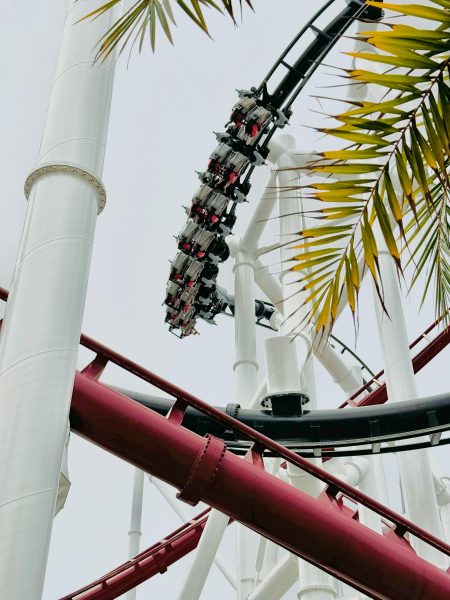
Universal Orlando’s parks are designed around immersive worlds inspired by film and television, with an emphasis on cinematic scale and high-intensity attractions. Franchises such as The Wizarding World of Harry Potter, Jurassic World, Transformers, and Marvel Super Hero Island place students inside highly detailed environments that highlight modern entertainment production.
These experiences frequently resonate with older students, particularly those drawn to realistic environments and thrill-based attractions. Universal’s ride mix includes roller coasters and thrill rides that are not as prominent at Disney, which can be a strong draw for high school groups.
However, Universal also offers immersive worlds that connect well with younger audiences. Universes inspired by Super Mario Bros., How to Train Your Dragon (both featured in Epic Universe), and other animated franchises appeal to younger students while still showcasing the same production and storytelling techniques.
Similarities Between Disney World and Universal Orlando
Even with clear differences in educational opportunities, park logistics, and other areas, Disney World and Universal Orlando share several similarities that are worth considering during the planning process.
Comparable Overall Cost
When trips are structured similarly, the overall cost of visiting Disney World and Universal Orlando is often comparable. Committing to either destination allows for better value and a more cohesive experience, as both offer pricing that tends to reward longer stays at a single resort. As a result, itineraries focused on one destination are typically more cost-effective than those that attempt to split time between both resorts, although pricing may vary. Focusing on a single resort also allows groups to use multi-day base tickets rather than more expensive “Park Hopper” or “Park-to-Park” options, which are often unnecessary for groups with enough time to dedicate a full day to each location.
On-Site Hotels and Transportation Benefits
Both destinations offer a range of on-site hotel options that provide meaningful benefits for student groups. Staying on-site typically includes dedicated transportation to and from the parks, which simplifies daily logistics and supervision. On-site guests may also receive early access to the parks, helping groups start their day efficiently before peak crowds arrive.
Flexible Itinerary Design for Student Groups
Disney World and Universal Orlando both allow schools to balance structured programming with independent time in the parks. Workshops and performances can be scheduled without dominating the itinerary, leaving ample time for students to experience attractions, shows, and dining in smaller supervised groups.
Bringing It All Together: Making the Right Choice for Your Group
With the key differences in mind, choosing between Disney World and Universal Orlando becomes less about preference and more about fit. Factors like trip length, park layout, and educational priorities tend to have the greatest influence on which destination makes the most sense. There is no single “right” choice, only the option that best supports a group’s goals and interests.
Junior Tours plans student trips to both Disney World and Universal Orlando. If you’re exploring options for your group, you can request more information to compare how each destination might work for your specific needs.