How Social Media Is Changing Student Travel, and What Educators Can Do About It
A group steps into Times Square for the first time, surrounded by towering digital billboards, constant motion, and the kind of energy that feels unmistakably New York. It’s loud, bright, and exactly what many students imagined it would be.
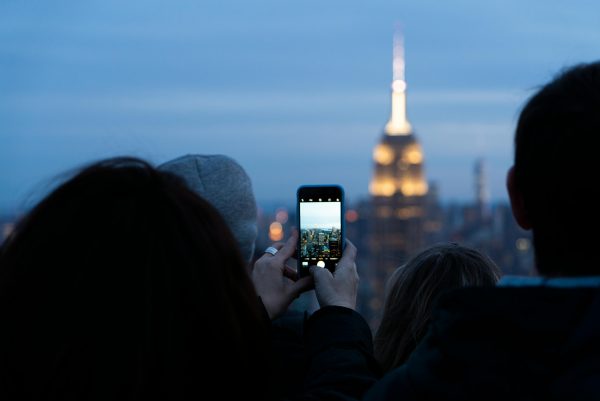
Phones come out almost instantly. The group gathers. A few quick adjustments, a burst of photos, maybe a short video. Within seconds, the moment is captured and ready to be posted online.
From the outside, it looks like exactly what a school trip to New York is supposed to be. And in some ways, it is. But if you zoom out, you’ll notice something else. The moment was documented before it was fully experienced.
That’s the quiet tension shaping student travel today. Not just what students experience, but how quickly those experiences are turned into content, and how that expectation influences the way trips are planned in the first place.
The New Reality: How Social Media Is Shaping Student Expectations
Today’s students don’t arrive on trips with a blank slate. They arrive with expectations shaped by an endless stream of curated content. Without always realizing it, many are working from an internal checklist – “This is where we need to go, this is the kind of photo we should take, this is what a ‘real’ trip is supposed to look like.”
Research reflects this shift. Over 80% of Gen Z and Millennial travelers now report that social media and influencer recommendations directly impact their booking decisions, frequently prioritizing “shareable” or visually driven destinations (per Expedia Group’s 2025 Traveler Value Index). It’s not necessarily a bad thing. Social media has given students a way to stay connected, document their experiences, and express themselves creatively.
But what students expect to see and what they ultimately remember are not always the same. For educators planning a trip, this can create a real tension.
When Trips Start to Feel Like Checklists
The influence of social media doesn’t just affect students – it subtly shapes how trips are designed.
There’s a natural instinct to build itineraries around the places and moments students feel like they already know from social media: recognizable landmarks, visually impressive moments, and experiences that match what they’ve already seen online. In many cases, that approach works. These experiences create excitement and help students feel connected to something culturally relevant and larger than themselves. Ignore them entirely, and a trip can feel like it’s missing something.
But when too much emphasis is placed on things students feel like they’re “supposed to do,” those experiences are less likely to feel meaningful later. When moments are approached as something to capture rather than fully engage with, they (ironically) don’t always stick.
On trips with itineraries that are overloaded with too many of these experiences, the pace can quickly become too compressed, with multiple major stops packed tightly together and little room in between. At that point, even meaningful experiences can start to blur together. It’s not the destinations themselves that are the issue, but the lack of space to absorb them.
The result can be a trip that feels like a sequence of checkboxes instead of a cohesive experience. A trip that feels full, but not necessarily meaningful.
The Moments That Stick
Ask students years after a trip what they remember most, and the answers are rarely the most photographed moments.
Instead, they point to the moments that didn’t feel scripted or expected – the ones that unfolded in real time and meant more than they thought they would:
- An aspiring performer meeting an actor from the Broadway show they just saw at the stage door
- A theatre workshop where a shy student suddenly finds their voice
- A business speaker or seminar that shifted how a student thinks about their future
- An exhibit or experience a student didn’t expect to connect with, but did
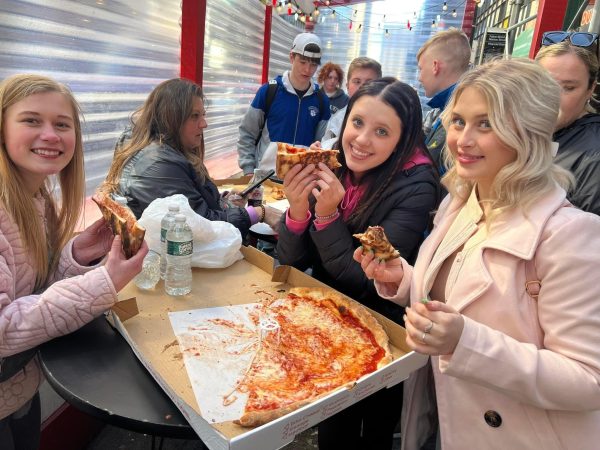
- That first bite of a New York slice shared with friends on a busy street corner
- The late-night laughter on the bus when a new student bonds with their classmates
These moments are harder to predict and even harder to capture. They don’t always look impressive in a single frame and don’t always translate to a quick post. But they’re the moments that tend to matter most once the trip is over.
The Challenge and Opportunity: Planning for Impact, Not Just Optics
For trip planners and educators, there’s a growing, often unspoken challenge: How do you design a trip that feels meaningful in a world where students expect it to look meaningful online? Because those are not always the same thing.
That tension also creates an opportunity. The goal isn’t to ignore social media or remove those high-profile, recognizable moments. Those experiences still matter – they create anticipation in the lead-up to the trip and excitement in the moment. But the real value of a trip has never been about how it looks. It’s about giving students moments they don’t expect and can’t get in a classroom, whether it builds confidence, shifts their perspective, or sparks a new interest. Those outcomes don’t always translate neatly to a photo or video, but they’re the moments students carry forward long after the trip ends.
The most effective trips are the ones that balance both: experiences that feel relevant in the moment, but meaningful in the long run.
How to Build More Meaningful Student Travel Experiences
A more intentional trip design doesn’t mean removing iconic experiences – it means balancing them with ones that invite participation, reflection, and connection. That balance can look different depending on the group and destination.
New York City for Theatre & Performing Arts Groups:
Seeing a Broadway show is often the centerpiece, and it should be. But the deeper impact often comes from what surrounds it. A behind-the-scenes workshop, a talkback with performers, or a visit to the Museum of Broadway can turn a performance from something students watch into something they understand and connect to. Even structured discussion time afterward (on the bus or back at the hotel) can help students process what they saw in a more meaningful way.
New York City for Business Groups:
Wall Street, the Charging Bull statue, and the New York Stock Exchange offer instant recognition, but on their own they can remain surface-level. Pairing business-focused sightseeing with seminars led by business professionals or visits to corporate offices helps students connect what they’re seeing to real-world career pathways. It shifts the experience from simply observing the environment to understanding how it functions.
Washington D.C. for Middle School and History Groups:
Monuments and memorials are a meaningful part of the trip. But when itineraries focus only on the places students already recognize, the group can miss the broader context. Integrating time at stops like the Smithsonian museums or the National Archives allows students to engage directly with national artifacts, primary sources, and stories that deepen their understanding beyond the visual experience of the monuments.
Orlando for Performance and Educational Groups:
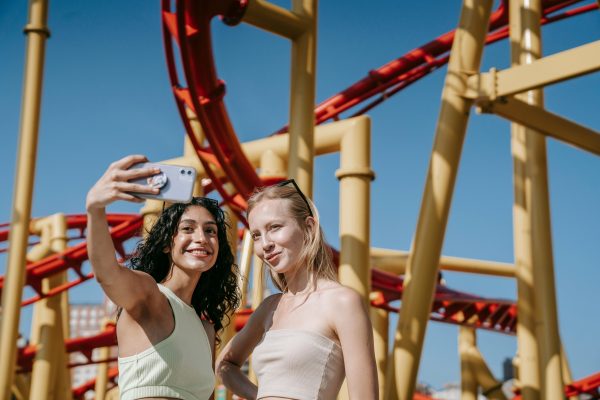
The scale and energy of attractions in theme parks like Disney World and Universal Orlando create immediate excitement. But without structure, those experiences can remain purely recreational. Incorporating performance workshops or educational programs helps connect those moments back to learning goals – whether that’s improving performance skills, understanding production and operations, or developing teamwork.
Across all destinations and group types, a few practical principles tend to make a difference:
- Build space on your itinerary, not just for activities, but for reflection and connection
- Balance high-visibility moments with high-engagement ones
- Encourage students to be present, not just observant
- Prioritize participation over observation when possible
These adjustments don’t require a complete overhaul of a trip. But they can significantly change how it is experienced and remembered.
Beyond the Post: What Really Matters
Social media isn’t going anywhere, and it shouldn’t. Students will continue to document their experiences, and those moments can be a meaningful part of the trip. But they shouldn’t define it.
For educators and mentors, there is an opportunity, and maybe even a responsibility, to guide students toward something deeper. To remind them that not every moment needs to be captured in a photo or video to be meaningful and memorable. That some experiences are better lived than posted. And that the best trips aren’t defined by how many likes they get, but by how long they stay with you and how they make you feel. Ultimately, that’s the measure that matters most.