The Day Chicago Turns Green: Inside the City’s St. Patrick’s Day Celebration
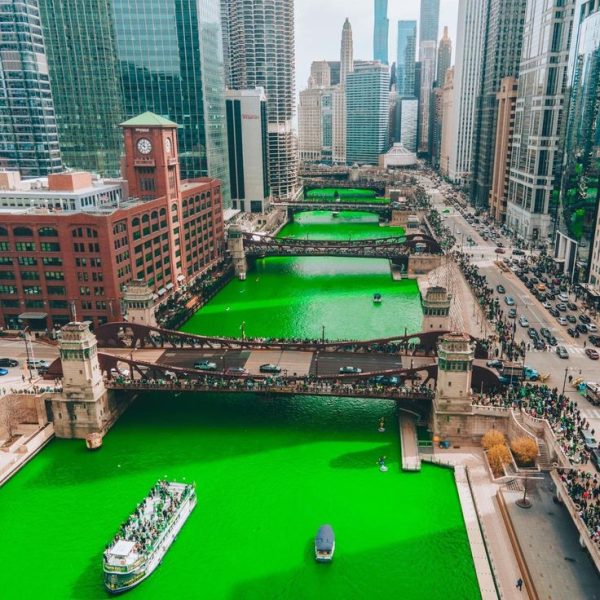
For a few hours each March, Chicago changes color. People start gathering along the Chicago River well before anything happens, lining bridges and walkways with a clear sense of anticipation. Then the boats arrive, and for a moment, attention across the city shifts almost entirely to the river. Within minutes, it changes from its usual gray-green to a bright emerald running through the middle of downtown.
This is Chicago on St. Patrick’s Day.
The Tradition Behind Chicago’s Green River
Plenty of cities celebrate St. Patrick’s Day, but Chicago’s large Irish-American population gives the celebration a deeper connection to the city.
Chicago has one of the largest Irish-American populations in the country, and the holiday has been part of the local culture for generations. Over time, it’s evolved into something that feels less like a single event and more like a city-wide tradition, with activity spread across multiple neighborhoods. Chicago’s St. Patrick’s Day celebration regularly draws hundreds of thousands of spectators each year, making it one of the largest in the country.
The river dyeing, which dates back to the 1960s, began with the Chicago Plumbers Union Local 130. They originally used dye to detect leaks in the river system before realizing it could be used to create a visible, city-wide display. Today, the same union still carries out the process each year, using an environmentally safe dye and keeping the exact formula a secret. The dye itself appears orange when released into the water before turning green, and the color typically lasts for several hours before gradually fading by the end of the day.
The Parade Across the City
The river may be the starting point, but the celebration quickly expands beyond it. The Chicago St. Patrick’s Day Parade runs along Columbus Drive near Grant Park, typically beginning in the late morning and drawing large crowds, especially closer to the river. The river dyeing and parade are usually held on the Saturday before St. Patrick’s Day, making that weekend the main day of celebration.
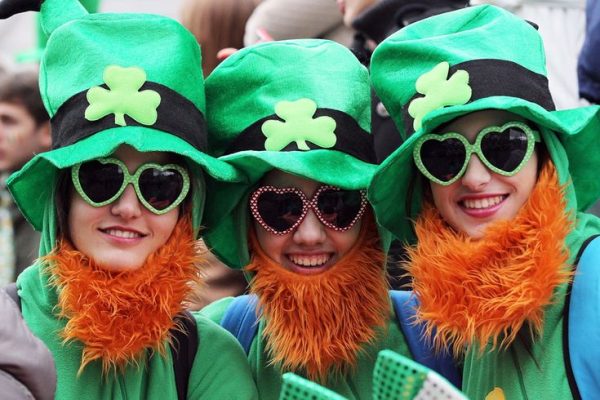
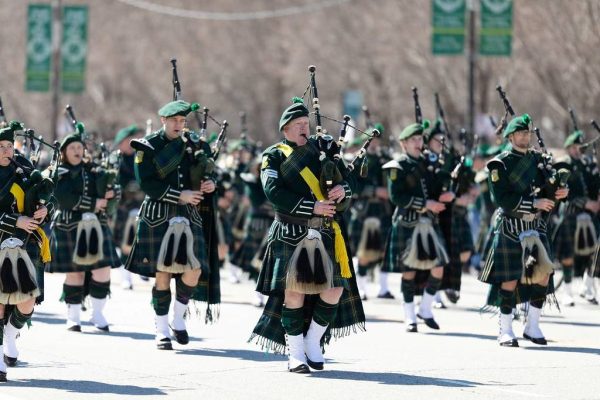
Downtown fills with locals and visitors wearing green to cheer on bagpipers, Irish dancers, marching bands, and floats as they move through the center of the city. Groups often gather near Grant Park for more space and easier movement, while tighter sections of the route can become more crowded.
The parade itself blends traditional Irish elements with local organizations and school groups, creating an atmosphere that is energetic but still accessible during the daytime. Many of the day’s main events are within walking distance, making it easy to move between the river, the parade, and nearby streets without much planning.
Celebrations Across Chicago’s Neighborhoods
Beyond downtown, different neighborhoods host their own celebrations. On the South Side, the Beverly and Mount Greenwood neighborhoods are known for their local parades with a more community-driven feel among families and longtime residents. In neighborhoods like Lincoln Park, Wrigleyville, and River North, the celebration plays out in packed bars, busy restaurants, and streets filled with people moving between them.
Bars and restaurants open early, featuring live music from traditional Irish bands and serving Irish-inspired staples like corned beef and shepherd’s pie alongside other familiar options. The shift between these areas is part of the experience, with people spending the day moving from one neighborhood to another as the celebration builds.
Planning Ahead for the Day
By the end of the day, it’s clear why this tradition stands out and continues to draw such large crowds. The celebration isn’t just for local residents and families. Visitors and student groups are a regular part of it, whether along the river, at the parade, or in neighborhoods across the city.
If you’re considering a future visit, a few simple tips can make the experience smoother:
- Plan to arrive early (ideally at least an hour before the river dyeing begins) to secure a spot along major bridges like Michigan Avenue or Columbus Drive, where views are best.
- Dress for cold and wind, even if temperatures seem mild. Layers, hats, and gloves go a long way, especially with time spent standing near the river.
- Set a clear meeting point before arriving. Large, recognizable spots like the Michigan Avenue Bridge, Columbus Drive near Grant Park, or a specific corner of the park work well.
- For larger groups, consider breaking into smaller groups with chaperones assigned to each group and scheduled check-in times.
- Walking between the river, parade, and nearby neighborhoods is often the fastest and most reliable way to get around, so wearing comfortable shoes is important.
- Plan to use public transportation (CTA trains and buses), as many downtown streets are closed or congested. Most tour operators and guides will already account for this in their planning.
With a little planning, Chicago’s St. Patrick’s Day is an easy way to experience one of the country’s most visited cities during one of its most recognized local traditions.