
Why Washington D.C. Trips Are a Rite of Passage for Students
There are trips students take because a teacher planned them. And then there’s the Washington D.C. trip, the one students have been hearing about since elementary school, the one older siblings come home from with stories, the one that feels less like a school event and more like something they’ve been quietly waiting for their whole middle school career.
It’s been that way for a long time. Parents took it. And now, sitting on a bus headed toward the capital, it’s their turn. There’s something about that continuity that gives the experience a weight most school trips never quite carry.
That sense of anticipation doesn’t come from nowhere. Each year, more than a million 8th grade students travel to Washington D.C., making it one of the most widely shared educational experiences in the country. It’s not just something a few schools do. It’s something happening across the country, class after class, year after year.
Washington D.C. earns it. But the reason this trip stays with students isn’t just about the city itself. It’s about everything that surrounds it, the age, the friendships, the timing, and the feeling of arriving somewhere that matters, together, for the first time.
The City That Earns Its Reputation
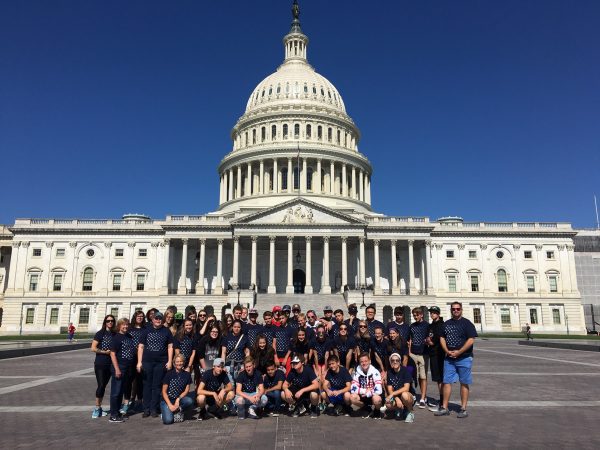
Washington D.C. is one of those destinations that can feel almost too familiar before you’ve ever been there. Students have seen the National Mall in textbooks, the Lincoln Memorial in film montages, the Washington Monument on the back of a dollar bill. It’s been part of the visual backdrop of American life for as long as they can remember.
What tends to surprise them is how different it feels to actually be there.
The scale changes things. The Washington Monument dominates the skyline in a way no photograph quite captures. The Lincoln Memorial steps are longer than they look. The Reflecting Pool stretches farther than expected. The city is built to convey significance, and for most students, that registers in a way a classroom can’t replicate.
The Smithsonian museums add a different kind of depth. There’s something about seeing an original artifact, a uniform, a piece of equipment, an object tied to a moment in history you’ve only ever read about, that makes that history feel more immediate. The National Air and Space Museum pulls in students who might not consider themselves history enthusiasts. The National Museum of American History covers everything from the earliest days of the republic to the recent past, and tends to hold attention longer than expected. The National Museum of Natural History offers a change of pace that works well mid-trip, when the weight of the monuments and memorials calls for something lighter.
The National Archives takes it a step further. The Declaration of Independence, the Constitution, and the Bill of Rights are held there, not reproductions, but the actual documents. For many students, standing in front of them creates a different level of connection. These aren’t images from a textbook. They’re the real thing, preserved in the same city where the government they established still operates.
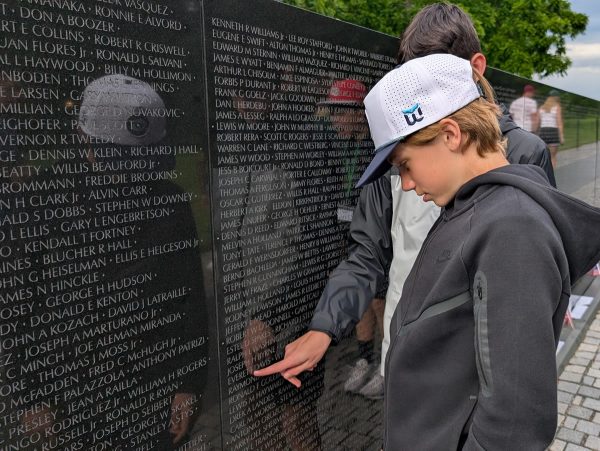
The memorials along the Mall tend to land quietly but firmly. The Vietnam Veterans Memorial has a way of stopping students mid-stride, the long black granite panels, the thousands of names, the people who come to find someone specific and run their fingers along the stone. The World War II Memorial feels monumental in a way that earns the word. The Martin Luther King Jr. Memorial, positioned along the Tidal Basin with excerpts from his speeches carved into the stone, offers a different kind of reflection than the war memorials nearby. Each one adds dimension to the broader story students have been learning.
The Trip Experience Itself
There’s a version of the Washington D.C. trip that lives entirely in the landmarks and museums. And then there’s the version students actually remember, which includes all of that but also what happens in between.
The bus is a bigger part of the experience than it sounds. Long stretches of highway with music playing, conversations drifting from funny to surprisingly honest and back again, the particular energy of being away from home with your classmates for the first time. There’s a looseness to those hours that doesn’t exist in a school building, and students tend to fill it in ways that become memorable in their own right.
The hotels, the group dinners, and the unstructured time in the middle of a packed day are where a lot of the social texture of the trip gets built. Students who don’t normally spend much time together end up sharing rooms, splitting off in the same small group, navigating a new city side by side. Some of those connections carry forward. Others are specific to the trip itself, which doesn’t make them any less meaningful.
There’s also a first real sense of independence that runs through the experience. Not total freedom, but something new, making decisions as a group, moving through a real city, handling a schedule that looks different from anything at home. For many middle schoolers, a Washington D.C. student trip is one of the first times that feeling shows up in a noticeable way.
Right Before Everything Changes
Part of what gives the D.C. trip its particular significance is when it happens.
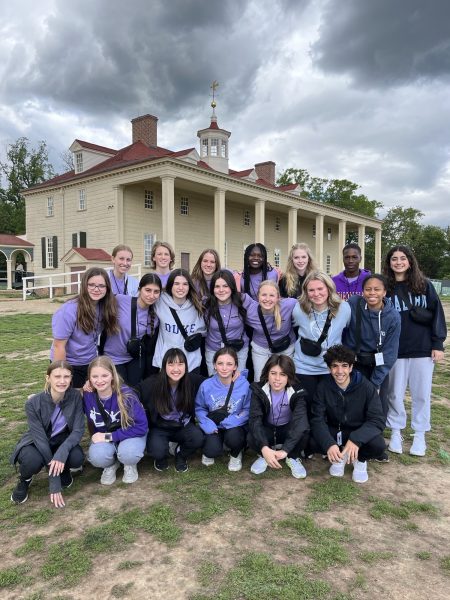
For most students, it falls at the end of middle school, often 8th grade, just before the transition to high school. Friend groups that have been together for years are about to shift. The environment that has felt familiar is about to change in ways they can sense, even if they can’t fully define yet.
Because of that, the trip often takes on the feeling of something more than just travel. It becomes a kind of shared send-off, a way to mark the end of one chapter before the next begins.
In many schools, it even starts to feel like an informal graduation. Not in the official sense, but as a celebration of everything the class has been through together, all happening outside of the classroom, in a completely different setting.
That adds a layer to the experience that isn’t written into any itinerary.
What Students Actually Remember
The landmarks are part of it. But what tends to stay with students is more specific and often more personal.
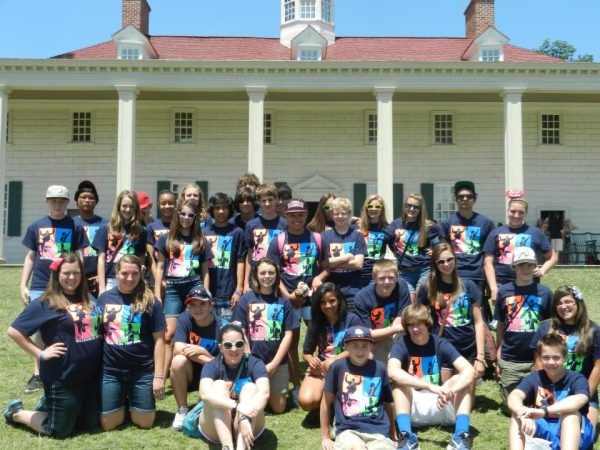
They remember the bus, long stretches of highway, everyone too tired to sleep and too wired to stop talking. They remember moving through a city that felt bigger than expected, with a kind of freedom that was new and exciting.
They remember certain moments clearly. Standing on the Mall and seeing everything come into view at once. Walking through a memorial and feeling the tone shift without anyone saying anything. Seeing something in a museum that caught them off guard.
They also remember the smaller things. The classmate who turned out to be funnier than expected. The late-night conversations in hotel rooms. The quick stops and in-between moments that weren’t planned, but ended up mattering anyway.
These aren’t always the moments students expect to remember while they’re on the trip. But they’re often the ones that last.
More Than a Field Trip
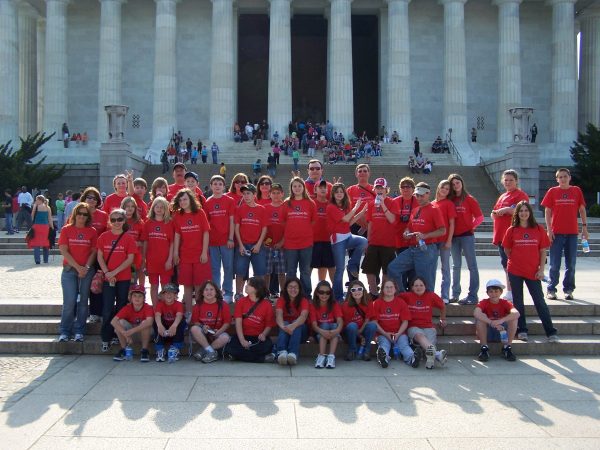
Educational trips to Washington D.C. have been a fixture of middle school programming for generations, and the reason that tradition has held is fairly simple. The city offers something a classroom can’t, the chance to experience what students have been learning in a real and immediate way.
But what makes middle school Washington D.C. trips stand out isn’t only the history or the landmarks. It’s the combination of the place and the timing.
Being thirteen or fourteen, away from home with your classmates, in a city that carries real significance, creates an experience that feels different from anything else students have done up to that point.
Educators and trip leaders who run these programs year after year see it play out consistently. Not always in one defining moment, but across the full experience. The city, the friendships, the independence, and the timing all come together in a way that’s difficult to replicate elsewhere.
That’s what turns the trip into something more.
Not just a requirement, not just a tradition, but a milestone students carry with them long after it’s over.
Bringing This Tradition to Your School
For schools that already run a Washington D.C. trip, the value is clear. It’s something students look forward to, talk about for years, and carry with them well beyond middle school. At that point, the focus often shifts from simply running the trip to refining it, making the experience more intentional, more balanced, and even more meaningful for each new class. If you’re looking for ways to evolve your program, click here to learn more.
For schools that don’t currently offer a Washington D.C. trip, it’s worth thinking about the role you can play in creating something your students will remember for years. These are the experiences students come back to, the ones that define their middle school years, and the ones tied to the teacher who made them possible. When it’s done right, it becomes more than a trip. It becomes a milestone, a celebration, and a shared memory that stays with them long after they leave your classroom. With the right planning and support, starting that tradition is easier than you might think.
If you want to see what a complete, well-structured Washington D.C. experience can look like for your students, you can explore our classic 8th grade Washington D.C. tour and sample itinerary here.
And whether your school already travels or is just starting to explore the idea, you can request a Washington D.C. 8th grade trip quote to start the conversation and begin building a trip your students will remember for years.